
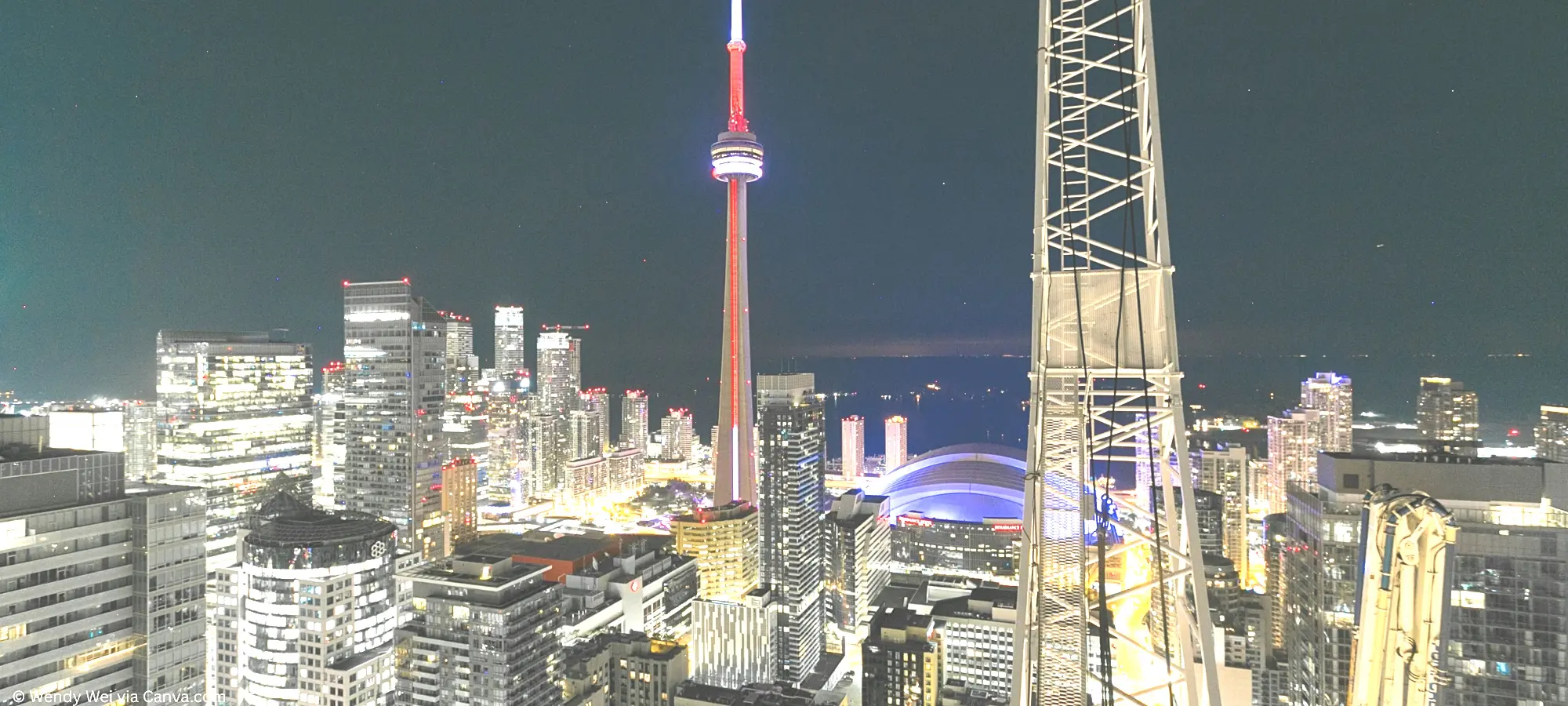
Toronto Travel FAQ: 20 Questions Every First-Time Visitor Asks
-
Visa Required (UK)?
eTA Required
-
Currency
CAD (Dollar)
-
Flight from London
~8 hours
-
Best Month to Visit
September
-
Main Airport
Pearson (YYZ)
-
City Transport
TTC + PRESTO
Toronto: What to Know Before You Go
Toronto is Canada's largest city: a waterfront metropolis on Lake Ontario with a skyline most visitors recognise and a depth of culture, food, and neighbourhood character that takes several visits to fully understand.
Most first-time questions centre on the same practical concerns: costs, transport, safety, weather, and how much time the city actually requires. The answers are generally more encouraging than visitors assume, particularly for UK travellers who benefit from a favourable exchange rate against the Canadian dollar. The Toronto transport network is well developed for a North American city, and the TTC subway and streetcar system covers the key tourist areas effectively.
This page answers 20 of the most common tourist questions in direct, factual terms, grouped by subject. Where information changes over time (entry requirements, transport fares, attraction pricing), the relevant official source is noted. Topics covered include pre-trip planning, getting there, costs, what to do, where to stay, nightlife, dining, day trips, and the practical realities of Toronto as a visitor destination in 2026.
Please Note! While efforts have been taken to ensure accuracy, the information provided is for general purposes only and may change over time. Entry requirements, transport fares, attraction prices, and travel advisories can all vary. Please verify with official government and transport authorities before travelling.
Planning Your Visit to Toronto
1. Is Toronto a good holiday destination?
Yes, and the numbers support the claim. According to Destination Toronto, the city attracted a record 28.2 million visitors in 2025, with UK arrivals growing 12 per cent, reflecting a strong and growing European market interest. Toronto offers a genuinely distinctive combination: a dramatic skyline rising from a freshwater lakeshore, an unusually diverse food scene, world-class museums, a thriving arts and theatre district, and an accessible base for some of North America's best day trips.
It is not a beach destination and it lacks the postcard romanticism of European capitals. What it offers instead is a confident, modern city that functions well, feels safe, and rarely disappoints visitors who approach it with realistic expectations.
2. How many days in Toronto is enough?
Three full days covers the highlights without feeling rushed: CN Tower, Royal Ontario Museum, Distillery District, St. Lawrence Market, Toronto Islands, and at least one neighbourhood walk through Kensington Market or the Danforth. Five days allows a full day at Niagara Falls and a deeper exploration of the waterfront and High Park. A long weekend of three nights is the minimum that justifies the transatlantic flight time for UK visitors.
Destination Toronto research indicates most overnight visitors stay three to five days, which aligns with what the city comfortably rewards.
3. What is the best month to fly to Toronto?
September is the standout choice. Temperatures sit at 17-22 degrees Celsius, summer humidity has dropped, hotel prices fall from their July and August peak, and the Toronto International Film Festival (TIFF) runs in the first two weeks of September, adding a world-class cultural event to the calendar. Crowds at major attractions are lighter than midsummer.
Toronto Season Summary for Visitors
- June to August: Warm and energetic, 24-30°C, full festival calendar, outdoor patios, Toronto Islands at their best. Busiest and most expensive period.
- May and September: Best balance of weather, lower prices, and shorter queues. Ideal for first-time visitors.
- October: Striking autumn foliage in the ravines and High Park, comfortable temperatures of 10-17°C, and fewer tourists.
- December: Holiday markets, festive lighting along the Distillery District, and indoor cultural events. Cold but characterful.
- January to March: Coldest and quietest. Genuine savings on accommodation, no queues at attractions, but temperatures regularly below -10°C with wind chill.
Getting to Toronto & Getting Around
4. Can I visit Toronto on a short break from the UK?
Yes, with the caveat that the flight time makes it a longer commitment than a European city break. Direct flights from London Heathrow to Toronto Pearson International Airport (YYZ) operate daily, taking approximately 7 hours 30 minutes to 8 hours westbound. Airlines on the route include Air Canada, British Airways, and Virgin Atlantic, which resumed its Toronto-London service in 2025. A minimum of five to six nights is sensible for UK visitors to justify the journey and explore the city properly, with at least one day trip included. Book flights through the Toronto Flights Guide for current fare comparisons and timing advice.
5. How do you get around Toronto using public transport?
Toronto's public transit system (TTC: Toronto Transit Commission) covers the city by subway, streetcar, and bus. The PRESTO card is the standard payment method: load credit onto the card and tap when boarding. The current adult fare is CAD $3.20 per journey using a PRESTO card, and the two-hour transfer rule allows route changes within two hours at no additional cost, making a single fare go considerably further than it appears.
- PRESTO Day Pass: CAD $13.50 for unlimited TTC travel from first use to end of service day.
- UP Express train: Links Pearson Airport to Union Station in 25 minutes. Fares from CAD $12.35 per person.
- Subway: Four lines covering the main tourist districts. Runs until approximately 01:30 on Friday and Saturday nights.
- Streetcars: Cover downtown routes including King Street West and Queen Street. More frequent than the subway for east-west downtown travel.
Google Maps and the Transit app both provide reliable real-time TTC routing. Full breakdown of routes and transfer options: Toronto Transport Guide.
6. What to do in Toronto for three days?
A well-structured three-day itinerary covers the city's main landmarks without rushing. Full day-by-day planning is available in the Toronto Sightseeing Itinerary. At a glance:
- Day 1: CN Tower observation deck or EdgeWalk, Ripley's Aquarium of Canada (both adjacent), Harbourfront Centre and the waterfront walk, dinner in the Entertainment District on King Street West.
- Day 2: Royal Ontario Museum (allow three to four hours), Bloor Street Annex neighbourhood, Kensington Market for lunch, Chinatown, Dundas Square in the early evening.
- Day 3: Toronto Islands by ferry from Jack Layton Ferry Terminal (10-15 minute crossing), beaches, cycling, and skyline views from Centre Island, then Distillery District for the afternoon and dinner in the Corktown neighbourhood.
Costs, Money & Tipping in Toronto
7. Is Toronto expensive for UK tourists?
Less so than many visitors expect. The CAD to GBP exchange rate (approximately CAD 1.75-1.80 per pound as of April 2026) works meaningfully in the favour of UK visitors. Toronto sits in a comparable price bracket to London for hotels and mid-range dining, but in Canadian dollars, which convert favourably.
Toronto Daily Budget Guide (April 2026)
- Budget traveller (hostel, TTC PRESTO card, casual dining): approximately CAD $100-130 per person per day (roughly £55-75).
- Mid-range (3-star hotel, restaurant dining, one or two paid attractions): approximately CAD $200-280 per person per day (roughly £110-160).
- Comfortable (4-star hotel, full restaurant meals, tours, shopping): CAD $350-500+ per person per day (roughly £195-280).
All Toronto hotel bills carry a 4% Municipal Accommodation Tax plus Ontario's 13% Harmonised Sales Tax, adding 17.52% to advertised room rates. Factor this into your hotel budget from the outset.
8. Is it expensive to eat out in Toronto?
Toronto's dining costs cover a wide range. The city's multicultural neighbourhood structure means genuinely affordable options exist alongside expensive waterfront and downtown restaurant choices.
- Casual dining and food hall: CAD $12-20 per person.
- Mid-range restaurant main course: CAD $22-38 per person.
- Dinner for two at a mid-range restaurant (with drinks): approximately CAD $75-120.
- Fine dining (multi-course): CAD $90-150 per person.
- Coffee (cappuccino): CAD $5-7.50.
Toronto's ethnic neighbourhoods offer the best value: Chinatown, Little India on Gerrard Street, the Danforth for Greek food, Little Portugal, and the Corso Italia strip on St Clair West all deliver quality meals at considerably lower prices than tourist-facing downtown venues. St. Lawrence Market is the best location for a quality, affordable lunch. Full recommendations in the Toronto Dining Guide.
9. What currency does Toronto use and can I pay by card?
Canada uses the Canadian dollar (CAD). Do not assume US dollars are accepted at face value: businesses in tourist areas sometimes accept USD but apply unfavourable conversion rates. Card payments (Visa, Mastercard, contactless, Apple Pay, Google Pay) are universally accepted across hotels, restaurants, shops, and transit top-ups. Cash is rarely necessary in central Toronto. Avoid currency exchange desks at the airport: use a credit card with no foreign transaction fees, or withdraw from a bank ATM in the city centre where rates are more competitive.
On the Ground in Toronto
10. Is Toronto safe to visit as a tourist?
Toronto is among the safer major cities in North America for visitors. Violent crime targeting tourists is rare. The downtown core, waterfront, Distillery District, Yorkville, Bloor Street, and the major entertainment areas are generally safe at all hours. Standard urban precautions apply: keep valuables secure on the TTC, avoid displaying expensive equipment on quiet streets late at night, and use licensed taxis or ride-share apps rather than unmarked vehicles.
The UK Foreign, Commonwealth and Development Office (FCDO) has updated travel advise for Toronto. Check gov.uk/foreign-travel-advice/canada before your trip for the current advisory and any updated entry requirements.
11. What is the rainy season in Toronto?
Toronto does not have a tropical rainy season. Rainfall is distributed fairly evenly throughout the year. April and May bring frequent spring showers. July and August are the wettest months by total precipitation volume, but summer rain in Toronto typically arrives as short, intense afternoon thunderstorms rather than prolonged grey days. November is the most persistently overcast month. A compact waterproof jacket is sensible for any visit, regardless of season.
12. What is the weather like in Toronto and what should I pack?
Toronto has four genuinely distinct seasons:
- Summer (June-August): Warm and humid, 24-30°C. Light clothing, sunscreen, and a packable waterproof for thunderstorms. High UV index means sun protection is necessary.
- Spring and Autumn (April-May, September-October): Comfortable temperatures of 10-20°C. Layers and a medium-weight jacket with waterproof shoes cover most conditions.
- Winter (November-March): Cold, regularly -5 to -15°C with significant wind chill off Lake Ontario. A properly insulated coat, thermal base layers, waterproof boots with grip soles, hat, gloves, and scarf are all necessary. Toronto winters should not be underestimated by European visitors unfamiliar with continental cold.
13. What should tourists avoid doing in Toronto?
- Do not jaywalk on major roads: Toronto enforces pedestrian crossing rules actively and fines are issued.
- Do not rent a car for the downtown area: Parking is expensive, one-way streets are confusing, and the TTC covers all tourist areas more efficiently.
- Do not pay in USD: Many businesses technically accept it but apply a poor exchange rate. Use CAD or pay by card.
- Do not take unofficial taxis from Pearson Airport: Use the licensed taxi queue, UP Express, or a ride-share app booked through your phone.
- Do not underestimate the city's scale: Toronto's tourist areas are spread across a considerable area. A neighbourhood that looks close on a map can be 30-40 minutes by TTC. Plan routes before leaving your accommodation.
Attractions & Things to Do
14. What are the top 5 things to do in Toronto?
- CN Tower: The city's defining landmark at 553 metres. The glass floor observation deck, EdgeWalk (outdoor ledge walk), and 360 Restaurant are all available. Advance online booking reduces queue time significantly.
- Royal Ontario Museum (ROM): Canada's largest museum with 13 million objects across natural history, ancient cultures, world art, and the striking Michael Lee-Chin Crystal extension. Allow half a day minimum.
- Ripley's Aquarium of Canada: One of North America's most impressive indoor aquariums, positioned beside the CN Tower. The 97-metre underwater tunnel through the Dangerous Lagoon shark tank is the centrepiece. Over 1.6 million visitors per year. Book tickets online in advance.
- Toronto Islands: A 10-15 minute ferry ride from the waterfront delivers beaches, cycling trails, Centreville Amusement Park, and an unobstructed view of the city skyline across the harbour.
- Distillery District and Kensington Market: Two of Toronto's most characterful neighbourhoods. The Distillery District occupies a preserved Victorian industrial complex with galleries, restaurants, and independent shops. Kensington Market is a dense, eclectic area of vintage clothing, global food stalls, and independent cafes. Both are free to explore.
15. How do you book sightseeing tours and attractions in Toronto?
Book major attractions online in advance to avoid queues. The CN Tower, Royal Ontario Museum, and Ripley's Aquarium all sell timed-entry tickets directly on their own websites at the same price as third-party platforms.
For guided tours, walking experiences, Niagara Falls day trips, and boat tours, GetYourGuide and Viator aggregate operators with upfront pricing and clear cancellation terms. Destination Toronto's website (destinationtoronto.com) lists current festivals and events. Hop-on, hop-off bus tours operate a double-decker route from the waterfront covering the CN Tower, Distillery District, Kensington Market, and Yorkville. Full recommendations in the Toronto Tours & Excursions Guide.
Families & Where to Stay in Toronto
16. Is Toronto good for families with children?
Toronto is an excellent family destination. The range of child-friendly attractions is strong across all age groups:
- Ripley's Aquarium of Canada: Consistently rated as one of Toronto's best family experiences. Sharks, rays, seahorses, and jellyfish tanks engage children across all ages.
- Ontario Science Centre: Hands-on science exhibits across three floors. Live science demonstrations run throughout the day.
- Toronto Zoo: 287 hectares housing over 5,000 animals, with a tram service for younger children and pushchair-accessible pathways throughout.
- High Park: Free zoo, playground, splash pad, and large open green space with accessible walking paths. Cherry blossoms in late April and early May are a popular family outing.
- Centreville Amusement Park (Toronto Islands): A traditional amusement park pitched at younger children, with rides, a petting zoo, and beach access.
The TTC is pushchair-accessible on most subway stations and major streetcar routes. Toronto's restaurant culture generally welcomes children, and most mid-range venues offer kids' menus on request.
17. Where is best to stay in Toronto for first timers?
The area bounded roughly by Bloor Street to the north, Lake Ontario to the south, Jarvis Street to the east, and Bathurst Street to the west covers the most practical accommodation zones for first-time visitors. Within this area:
- Entertainment District (King Street West): Walking distance to CN Tower, Ripley's Aquarium, and the waterfront. Best for nightlife proximity and easy access to Union Station.
- Yorkville: Upscale neighbourhood near the Royal Ontario Museum and Bloor Street shopping. Suited to travellers prioritising comfort over proximity to the waterfront.
- Distillery District / Corktown: Quieter in the evenings, characterful surroundings, and well connected by streetcar. Good mid-range hotel options.
- Downtown Financial District: Convenient to Union Station and the PATH underground walkway network, but quieter at weekends when the business crowd is absent.
For detailed hotel recommendations by budget and neighbourhood, see the Toronto Hotel Guide.
Nightlife, Dining & Culture
18. What is the nightlife like in Toronto?
Toronto's nightlife is well established across several distinct areas, each with a different character. It is not a city that closes early.
- King Street West: The primary entertainment strip. Bars, clubs, rooftop venues, and late-night restaurants are concentrated here, with dress-code enforcement at the larger clubs during weekend nights.
- Ossington Avenue: The neighbourhood bar and craft cocktail street. More relaxed and local-feeling, considerably less crowded than King West on a typical weekend.
- Queen Street West: Indie bars, live music venues, and late-night food from a reliable street food scene. The Horseshoe Tavern on Queen West has been a live music institution since 1947.
- The Danforth: Greek restaurant strip with a neighbourhood pub atmosphere. Good for an evening meal and drinks without the pressure of the Entertainment District.
- Comedy scene: Toronto has one of North America's strongest stand-up comedy traditions. JFL42 (Just for Laughs Toronto) runs in September with over 100 shows across the city.
Toronto also has a well-developed theatre district on King Street with a year-round programme of West End transfers and original productions. Full nightlife neighbourhood guidance: Toronto Nightlife Guide.
Day Trips & Canada Tour Planning
19. What are the best places to visit near Toronto?
- Niagara Falls (90 minutes by road or bus): The obvious and entirely worthwhile choice. The Canadian side of the falls is the better vantage point. Niagara-on-the-Lake, a preserved 19th-century town with good wineries, adds a worthwhile half-day extension. Organised day trips depart daily from Union Station.
- Ottawa (4 hours by train): Canada's capital. The Parliament Buildings, National Gallery, Canadian Museum of History, and the Rideau Canal make it a rewarding addition to a longer Canadian itinerary.
- Niagara Wine Region: The peninsula between Lake Erie and Lake Ontario produces respected ice wine and Riesling. Several wineries offer tours and tastings within 90 minutes of downtown Toronto.
- Algonquin Provincial Park (3 hours north by car): Canoe routes, moose sightings, and a wilderness landscape that provides genuine contrast to the city. Best experienced with a car rental from Toronto.
- Muskoka Lakes (2 hours north): Ontario's cottage country. A summer destination for watersports, hiking, and relaxed lakeside living.
20. Should Toronto be included in a tour of Canada?
Without question. Toronto is Canada's largest city, its financial capital, and the natural gateway for international arrivals from the UK and Europe. Pearson International Airport (YYZ) is Canada's busiest hub for transatlantic flights, making it the most practical starting or finishing point for a cross-country itinerary.
From Toronto, connections are direct to Vancouver (5 hours by air), Calgary (4 hours), Montreal (1 hour by air or 5 hours by train), and Quebec City (1 hour 15 minutes by air). Via Rail's The Canadian train service between Toronto and Vancouver takes approximately four days with notable scenery through the Rockies. A Canadian itinerary that includes Toronto, Montreal, and Vancouver covers three of the country's most compelling cities and reflects Canada's linguistic and cultural breadth.
Toronto Quick-Answer FAQs
Expand the questions below for concise answers to the most frequently asked practical questions about visiting Toronto.
Tourist visits for UK passport holders require an Electronic Travel Authorisation (eTA) for visa-exempt nationals flying to Canada. The eTA costs CAD $7 and is applied for online at canada.ca. It links digitally to your passport and is typically approved within minutes, though it can occasionally take longer. Apply before you book flights rather than later.
Yes. Tipping in Toronto is a cultural expectation, not optional courtesy as in the UK or much of Europe. The standard rate at sit-down restaurants is 15-20% of the pre-tax bill. Many card payment terminals now default to prompting 18%, 20%, or 25%. Tipping also applies to bars (CAD $1-2 per drink), taxi and rideshare drivers (10-15%), hotel housekeeping (CAD $2-5 per night), and hotel porters (CAD $2-3 per bag). Not tipping at a restaurant on normal service will be noticed and is considered impolite.
Toronto operates on Eastern Standard Time (EST), which is UTC-5. During UK winter (GMT, November to March), Toronto is five hours behind the UK. During UK summer (BST, March to October), Toronto is four hours behind. When it is noon in London in summer, it is 8:00 AM in Toronto. Toronto also observes its own daylight saving time changes, which differ slightly from UK clock changes, creating a brief five-hour difference in spring and autumn.
Yes, without hesitation. Toronto's tap water is drawn from Lake Ontario, treated to a high standard, and consistently meets Canadian federal drinking water guidelines. There is no need to buy bottled water during your visit. Refilling a reusable bottle is practical and considerably cheaper than purchasing bottled water at Toronto cafe and restaurant prices.
Several significant attractions are free or partially free. The Art Gallery of Ontario (AGO) offers free permanent collection admission for visitors under 25, and free first Wednesday evenings of each month for all visitors. The Bata Shoe Museum has a pay-what-you-can first Thursday of each month. Kensington Market and the Distillery District are free to explore on foot. The Scarborough Bluffs, High Park, and the Don Valley ravine trails are all free and provide a genuinely different perspective on the city beyond the downtown core.
English and French are Canada's two official languages. Toronto is primarily an English-speaking city and you will encounter no language barrier whatsoever. Toronto is one of the most linguistically diverse cities on the planet: over 180 languages are spoken across its neighbourhoods. In areas like Chinatown, Little India, Little Portugal, and Greektown on the Danforth, you will encounter a mix of community languages alongside English. All signage, menus, and tourist information are provided in English as standard.
The UP Express train is the most efficient option for most visitors. It runs from Pearson Airport Terminal 1 to Union Station in downtown Toronto in 25 minutes, with departures every 15 minutes. Fares are CAD $12.35 per person using a PRESTO card or the UP Express app. From Union Station you connect directly to the TTC subway. A licensed taxi to the city centre costs approximately CAD $55-65 and takes 25-45 minutes depending on traffic. Full transfer options: Toronto Airport Transfers Guide.
Toronto is an excellent shopping city. Bloor Street between Avenue Road and Bay Street is the luxury corridor with major international brands. Eaton Centre (downtown) is one of Canada's busiest shopping malls with over 250 stores. For independent and vintage shopping, Kensington Market, Queen Street West, and the Ossington strip are strong alternatives to chain retail. Ontario's 13% Harmonised Sales Tax (HST) is added at the till to all retail prices. There is no tax refund scheme for international visitors to Canada. For neighbourhood-by-neighbourhood guidance, see the Toronto Shopping Guide.
Toronto's food identity is defined by its multicultural character rather than a single national cuisine. Poutine (chips, cheese curds, and gravy) is a Canadian staple available across the city. Peameal bacon sandwiches at St. Lawrence Market are a Toronto-specific institution. Butter tarts (a flaky pastry with sweet filling) are a distinctively Canadian dessert. Dim sum in Chinatown, Greek food on the Danforth, and Portuguese custard tarts in Little Portugal are all worth seeking out. For full neighbourhood food recommendations see the Toronto Dining Guide.
Toronto has a dense year-round event calendar. The Toronto International Film Festival (TIFF), held each September, is one of the world's most influential film festivals. The Toronto Caribbean Carnival in late July and early August is the largest Caribbean festival in North America. Pride Toronto in June is a major international event. Nuit Blanche in October is an all-night contemporary art event. The Canadian National Exhibition (CNE) runs for eighteen days in late August and early September with carnival rides, food competitions, and an air show over Lake Ontario.
More Toronto Travel Guides
Planning your Toronto trip? Use these dedicated guides to go deeper on flights, transport, hotels, food, nightlife, shopping, tours, and a full sightseeing itinerary:
Toronto Flights Guide
Transport Guide
Toronto Hotel Guide
Toronto Dining Guide
Toronto Nightlife Guide
Toronto Shopping Guide
Tours & Excursions
Airport Transfers Guide
Sightseeing Itinerary
Toronto City Guide
Search Toronto Flights
About the Author
Disclaimer
Articles, Guides and Advisories
Efforts have been made to ensure the accuracy of the information at the time of writing; however, content is provided for general informational purposes only, may change over time, and should be independently verified where appropriate. Entry requirements (including eTA requirements), transport fares, attraction prices, and travel advisories are particularly subject to change. Always verify with official government and transport authority sources before travelling. Please see our Site Disclaimer and travel and booking advice pages for full details. Flight4 may earn a commission on bookings made via links on this page; please see our Affiliate Statement for details.
Book With Our Partners
Some links below are affiliate links; we may earn a commission at no extra cost to you. Each service is booked directly with its provider, on their terms. Flight4 does not sell or organise travel, or offer these as a package or combined travel arrangement. Affiliate Statement
Personalises the options below

How we score tour and ticket platforms
Skip-the-line tickets and guided tours across Toronto, bookable instantly online.
View Toronto Tours
Compare central Toronto hotels with free cancellation on most rooms.
View Toronto Hotels
Compare hundreds of airlines for the cheapest route into Toronto.
Search Toronto Flights
How we score airport transfer platforms
Pre-booked airport transfers to and from Toronto, at a fixed price with flight tracking.
View Toronto Transfers
How we score car hire platforms
Compare car hire suppliers for getting around Toronto and the wider region.
Compare Toronto Car Hire