
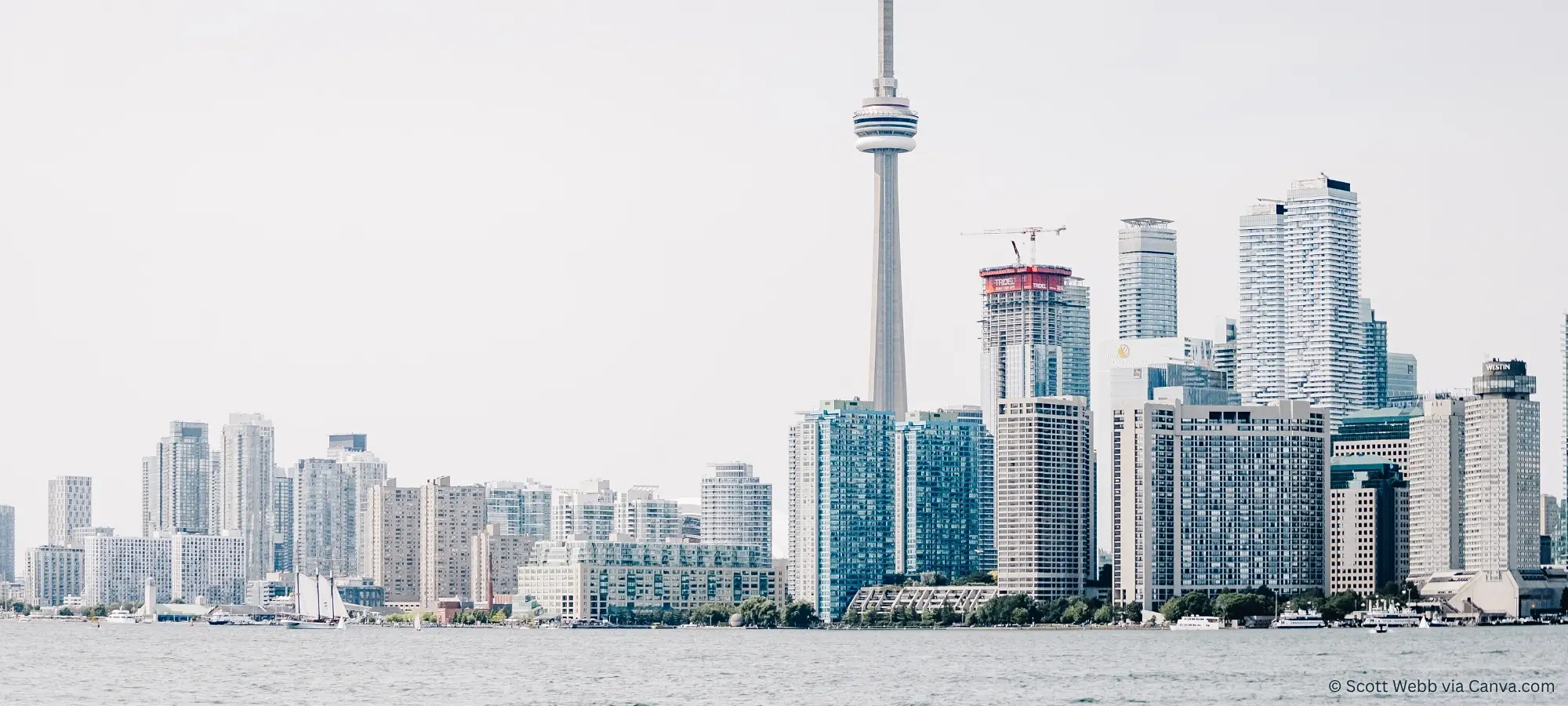
Toronto City Travel Guide 2027: Your Complete Visitor Handbook
-
Direct Flights (UK)
~8h Non-Stop
-
Best Months
Jun: Sep
-
Currency
CAD (C$)
-
City Transport
TTC & PRESTO
-
Languages
English & French
-
2025 Visitors
28.2 Million
Toronto: Canada's Largest City and a Global Travel Destination
Toronto sits on the northwestern shore of Lake Ontario and is the capital of the province of Ontario.
Toronto is Canada's financial and cultural capital. For visitors, the city offers a compact package of world-class museums, entertainment, distinct multicultural neighbourhoods, a globally acknowledged food scene, and a waterfront that opens out onto one of the Great Lakes. For practical planning, including flight routes and booking advice from the UK, see the linked guide.
This guide covers what to see, eat, and do in Toronto. It includes neighbourhood breakdowns, transport advice, accommodation options, nightlife areas, shopping districts, seasonal timing, a full events calendar, and 10 FAQs for first-time visitors.
Please Note: Information is for guidance only and may change. Always verify details with your airline, agent, provider and official sources before travelling.
What Makes Toronto Worth Visiting
Toronto attracted a record 28.2 million visitors in 2025, generating $9.1 billion CAD in direct spending, according to Destination Toronto's annual report (January 2026). UK arrivals grew by 12% year on year, making British visitors one of the fastest-growing international segments.
The appeal is straightforward. Toronto is one of the most multicultural cities on the planet, with over 200 ethnic groups and 140 languages spoken across its neighbourhoods. That diversity translates directly into the food, the festivals, and the street-level energy. You do not need to travel between cities to experience Korean, Portuguese, Italian, Caribbean, Chinese, and Indian culture. In Toronto, they sit side by side, sometimes on the same block.
The City's Geography Works in Your Favour
Toronto's layout is manageable. The downtown core stretches from the lakefront north to Bloor Street, and most of the major attractions, entertainment venues, and restaurant districts sit within that zone. The TTC subway, streetcar network, and bike-share system make getting around simple. The Toronto Islands are a 15-minute ferry ride from the harbour and offer beaches, cycling trails, and the best unobstructed skyline view in the city.
Lake Ontario is not a backdrop. In summer, it becomes an active part of daily life: kayaking, harbour cruises, outdoor concerts at the Harbourfront Centre, and waterfront cycling trails connect the eastern Beaches neighbourhood all the way west to the Humber River. For a full breakdown of transport options and passes, see the Toronto Transport Guide.
The Skyline and Architecture
The CN Tower (553 metres) dominates. Whether you visit the LookOut observation deck, walk on the glass floor 342 metres up, or attempt the EdgeWalk around the exterior of the tower's main pod, it remains the defining Toronto experience. At ground level, the city mixes Victorian industrial heritage (the Distillery District, St. Lawrence Market) with sharp modern architecture: the Royal Ontario Museum's angular Michael Lee-Chin Crystal addition, Frank Gehry's Art Gallery of Ontario redesign, and the stacked-box Cube House condos on Queen West.
Casa Loma, a 98-room Gothic Revival mansion built in 1914 by financier Sir Henry Pellatt, is one of the more unusual attractions. It is equal parts grand ambition and cautionary tale. The estate bankrupted Pellatt within a decade of completion and now operates as a museum and event venue.
Top Attractions and Sightseeing
Toronto's paid attractions cluster downtown, making them practical to combine. Here is a condensed overview of the most worthwhile options:
| Attraction | Approx. Adult Price (CAD) | Time Needed | Best For |
|---|---|---|---|
| CN Tower | $47-62 | 1.5 hours | Panoramic views, glass floor |
| Royal Ontario Museum | $24 – $35 | 2 – 3 hours | Natural history, world cultures |
| Ripley's Aquarium | $45 | 1.5 – 2 hours | Families, shark tunnel |
| Art Gallery of Ontario | $30 (free 1st Wed evening) | 2 hours | Canadian and Indigenous art |
| Casa Loma | $45 | 1.5 hours | Architecture, history, gardens |
| Hockey Hall of Fame | $25 | 1 – 1.5 hours | Sports fans, interactive games |
| Toronto Islands Ferry | $9.57 return | Half day | Beaches, cycling, skyline views |
Saving money: The CityPASS (around $134.96 CAD + tax) bundles five attractions including the CN Tower and Ripley's Aquarium with a reported saving of up to 38%. The Art Gallery of Ontario is free on the first Wednesday evening of each month, 6pm to 9pm. (book entry tickets online in advance to ensure entry). The city also runs several free museums including Fort York, Spadina Museum, and Mackenzie House.
For a full sightseeing plan with routes and timing, see the Toronto Sightseeing Itinerary.
Top Tip: If you use public transit, showing a PRESTO card can save you 15% on CN Tower timed general admission (subject to availability and T&Cs).
Toronto's Best Neighbourhoods for Visitors
Toronto's character sits in its neighbourhoods. The real city exists between the landmarks, and spending a few hours walking through a handful of these districts is the quickest way to understand why people compare Toronto to London or New York for street-level energy.
Kensington Market and Chinatown
Kensington Market is a pedestrianised patchwork of vintage shops, independent cafes, global street food stalls, and colourful murals. On Pedestrian Sundays (monthly, May to October), cars are banned entirely and the streets fill with buskers, pop-up food vendors, and live art. Chinatown sits adjacent on Spadina Avenue and offers some of the best-value eating in the city. The two neighbourhoods work best explored together on foot.
Distillery Historic District
A cluster of 40 restored Victorian-era industrial buildings that once housed the Gooderham and Worts distillery (at one point the largest distillery in the world). Today it houses galleries, boutique shops, restaurants, breweries, and a regular calendar of outdoor markets and events. It is car-free, photogenic, and relaxed enough to spend an afternoon without a plan.
Queen Street West
The indie artery. Stretching west from University Avenue, Queen West is lined with record shops, tattoo parlours, independent bookstores, gallery spaces, and the kind of restaurants where the menu changes weekly. The Drake Hotel anchors the strip and operates as a combined hotel, restaurant, lounge, and live music venue. Graffiti Alley, running parallel along Rush Lane, is one of the most photographed streets in the city.
St. Lawrence Market
Operating since 1803, St. Lawrence Market was named the world's best food market by National Geographic. The Saturday Farmers' Market is the main event, with over 120 vendors selling fresh produce, artisanal cheese, baked goods, and the iconic peameal bacon sandwich at Carousel Bakery (a Toronto breakfast institution). The building itself is worth visiting for the heritage architecture alone.
Yorkville
Toronto's most upscale neighbourhood. What was a 1960s bohemian folk-music scene is now home to designer boutiques, high-end galleries, and the city's most exclusive restaurant reservations. Useful as a contrast to Kensington Market and worth a walk even if the price tags are aspirational. The Royal Ontario Museum sits at the southern edge.
The Harbourfront and Waterfront
The lakefront stretching from the ferry terminal to the Power Plant Contemporary Art Gallery is one of the most walkable waterfront sections in any North American city. In summer it hosts free outdoor concerts, artisan markets, and kayak rentals. The Harbourfront Centre runs a year-round programme of arts, literary, and cultural events.
Toronto in Pictures:


Where and What to Eat in Toronto
Toronto's food scene is a direct product of its multicultural population. There is no single "Toronto cuisine," but there are several dishes and food experiences that the city does better than anywhere else in Canada.
Toronto Signature Eats
- Peameal bacon sandwich at Carousel Bakery (St. Lawrence Market). Cornmeal-crusted back bacon on a soft Kaiser roll. This is the unofficial city dish.
- Jamaican patties from Patty King Takeout, or Golden Patty Bakery in Kensington Market. Flaky pastry filled with spiced beef, chicken, or vegetable. Toronto has the largest Jamaican diaspora outside Jamaica.
- Hakka Chinese. Toronto is one of the few places in the world where Indian-Chinese fusion cooking thrives in dedicated restaurants, a legacy of Calcutta-born Chinese-Canadian immigration.
- Poutine. Chips, cheese curds, and gravy. Toronto puts its own spin on Quebec's national dish with creative toppings at spots like Smoke's Poutinerie.
Best Eating Streets by Budget
| Budget Level | Where to Go | What to Expect |
|---|---|---|
| Budget (C$8 – 15) | Kensington Market, Chinatown, Little India (Gerrard St) | Street food, market stalls, cash-only spots |
| Mid-range (C$20 – 45) | Queen West, Ossington Strip, Leslieville | Brunch spots, wine bars, creative menus |
| High-end (C$60+) | King West, Yorkville, Financial District | Tasting menus, rooftop dining, omakase |
Tipping: Expect to add 15 to 20% at sit-down restaurants. Although tipping is optional, it is often regarded as 'not optional' in Canadian dining culture. Counter service and takeaway do not require a tip. For a deeper breakdown of dining options, see the Toronto Dining Guide.
Toronto After Dark: Nightlife and Live Music
Toronto's nightlife runs deep and divides neatly by neighbourhood. The legal drinking age in Ontario is 19. Most bars close at 2am, though certain venues hold late licences until 4am.
King West and the Entertainment District
This is where the big-production nightlife lives. King Street West and Adelaide Street host the city's major clubs, supper clubs, and bottle-service rooftop bars. Venues like REBEL (one of the largest nightclubs in Canada), Lavelle (rooftop bar with downtown views), and Fiction are the anchors. It is polished, it is loud, and it runs late. Dress codes apply at higher-end spots.
Queen West
A completely different frequency. Queen West rewards bar-hopping and spontaneity. The Drake Hotel is the cornerstone, offering live music, DJ sets, and a rooftop patio. Surrounding it are natural wine bars, cocktail lounges, and intimate gig venues. The Dakota Tavern hosts some of the best alt-country and roots music sets in the city.
Kensington Market
The underground nightlife district. Expect dive bars, mezcal joints, unlabelled doorways leading to cocktail dens, and the kind of energy that depends entirely on who else walked in that evening. It is unpredictable, unpretentious, and often the most memorable night out in the city.
Live Music
Toronto is a strong live music city with venues at every scale. The Horseshoe Tavern on Queen West has hosted emerging acts since 1947. Massey Hall is the grand heritage concert hall. Rogers Stadium (opened June 2025) is the newest large-format music venue in the GTA. Jazz Bar, The Rex, and Poetry Jazz Cafe serve the jazz and blues circuit. For a full nightlife breakdown by area, see the Toronto Nightlife Guide.
Shopping in Toronto
Toronto's shopping ranges from underground mall networks to single-vendor vintage markets, with a clear split between mainstream retail and independent shopping streets.
The PATH
Toronto's underground pedestrian walkway system connects 30 kilometres of shops, food courts, and services beneath the downtown core. It links directly to Union Station, major office towers, and several hotels. On cold or rainy days, the PATH is the city's secret weapon. It is the largest underground shopping complex in the world by total area.
By Style
- Mainstream and malls: CF Toronto Eaton Centre (over 250 stores, downtown), Yorkdale Shopping Centre (north of the core, luxury brands).
- Designer and high-end: Yorkville's Bloor Street corridor, the "Mink Mile." Chanel, Gucci, Louis Vuitton, Holt Renfrew.
- Independent and vintage: Kensington Market, Queen West, Ossington Avenue, Junction neighbourhood. Small-batch designers, vintage clothing, vinyl records, second-hand bookshops.
- Markets: St. Lawrence Market (Saturday Farmers' Market), Trinity Bellwoods flea market (seasonal), Evergreen Brick Works Farmers' Market (weekends).
For store recommendations and district-by-district breakdowns, see the Toronto Shopping Guide.
Getting Around Toronto
Toronto's public transport system (the TTC) operates subways, streetcars, and buses on a unified fare system. For tourists, the setup is straightforward:
How to Pay
Tap a PRESTO card, a contactless debit or credit card, or your phone wallet on the reader when you board. A single adult fare costs $3.35 CAD ($3.30 CAD when using a PRESTO card or contactless payment) and includes a two-hour transfer window, meaning you can switch between subway, streetcar, and bus without paying again within that time. Cash is accepted (exact change only) but does not include the two-hour transfer benefit.
Best Value for Visitors
The TTC Day Pass ($13.50 CAD) gives unlimited travel for one full day across all TTC services. It is sold as a PRESTO Ticket from any subway station vending machine. If you plan to ride more than four times in a day, the Day Pass saves money. Since 1 September 2026, the TTC has capped fares at 47 paid rides per calendar month, which benefits longer-staying visitors.
The Streetcar Experience
Toronto's streetcar network is one of the largest remaining in North America. The 501 Queen line and 504 King line are the most useful for tourists, running through the Entertainment District, Chinatown, Queen West, and into the eastern Beaches neighbourhood. Riding a streetcar is both practical transport and a sightseeing experience.
Airport Connections
Toronto Pearson International Airport (YYZ) is 27km northwest of downtown. The UP Express train reaches Union Station in 25 minutes ($12.35 CAD or $9.25 CAD if using a PRESTO card). Taxis and rideshares cost approximately $50 to $70 CAD depending on traffic. Billy Bishop Toronto City Airport (YTZ) sits on the waterfront islands and connects to the downtown core via a free pedestrian tunnel and shuttle. For all transfer options, see the Toronto Airport Transfers Guide.
Where to Stay in Toronto
Toronto's hotel market caters to every budget. Downtown hotel occupancy rates average around 70%, so booking in advance during peak summer months and special events is strongly recommended.
| Area | Best For | Price Range (per night) |
|---|---|---|
| Entertainment District / King West | Nightlife, restaurants, central access | C$180 – C$400 |
| Yorkville | Luxury, boutique shopping, museums | C$300 – C$700+ |
| Distillery District | Couples, heritage atmosphere | C$200 – C$350 |
| Queen West | Indie culture, art, younger travellers | C$150 – C$300 |
| Harbourfront / Waterfront | Families, lake views, ferries | C$200 – C$450 |
New hotel openings between 2021 - 2025 include the Ace Hotel, Nobu Hotel, W Hotel, and 1 Hotel. Hostel options in the city centre are limited compared to European cities, but HI Toronto on Church Street remains the best-rated budget option. For full hotel recommendations, see the Toronto Hotel Guide.
Note! A major upcoming opening is the Le Méridien Toronto Pinnacle Hotel, on the lower floors of the 106-storey Pinnacle tower at 1 Yonge Street; its opening date has moved more than once, so check before you book.
Toronto Events Calendar
Toronto runs a packed events calendar. The following table covers the major annual highlights. This section will be expanded into a dedicated events page in future.
| Month | Event | Type |
|---|---|---|
| Feb – Mar | Lumière: The Art of Light (Ontario Place) | Free outdoor light art |
| March | Sugar Shack TO (Harbourfront Centre) | Maple festival, free entry |
| May | Doors Open Toronto | Free access to 100+ buildings |
| June | Luminato Festival | Multi-arts festival |
| June | Toronto Jazz Festival | Free outdoor and ticketed concerts |
| July – Aug | Toronto Caribbean Carnival (Caribana) | Caribbean parade and festival |
| August | Canadian National Exhibition (CNE) | Fair, food, rides |
| September | Toronto International Film Festival (TIFF) | World-class film premieres |
| October | Nuit Blanche | Free all-night art event |
| Nov – Dec | Toronto Christmas Market (Distillery District) | Holiday market and lights |
| Year-round | Maple Leafs (NHL), Raptors (NBA), Blue Jays (MLB) | Professional sports |
Please Note: Toronto's Events Calendar is subject to change and confirmation; please check all details directly with official authorities before booking.
Tours, Excursions and Day Trips
City Tours
| Tour Type | Duration | Approx. Price (CAD) |
|---|---|---|
| Hop-on Hop-off Bus (13 stops) | Full day | $67 CAD |
| Walking food tour (Kensington/Chinatown) | 3 hours | $80 – $110 |
| Harbour dinner cruise | 2.5 hours | $120 – $180 |
| Helicopter scenic flight | 12 minutes | $140 – $160 |
| Self-guided audio walking tour (app-based) | 2 – 4 hours | $10 – $20 |
Day Trips from Toronto
- Niagara Falls: 90 minutes by car, 2 hours by GO Bus/Train. The most popular day trip from Toronto. Combine with a visit to Niagara-on-the-Lake for wineries and the Shaw Festival theatre.
- Muskoka: 2 hours north. Lake country with over 1,600 lakes. Known as "cottage country," it is the summer escape for Torontonians and increasingly popular with international visitors.
- Prince Edward County: 2.5 hours east. Ontario's answer to a wine region, with over 40 wineries, cycling trails, and Sandbanks Provincial Park beaches.
- Blue Mountain: 2 hours north. Skiing in winter, mountain biking and hiking in summer. Year-round resort village at the base.
For guided excursion options and booking advice, see the Toronto Tours & Excursions Guide.
When to Visit Toronto
Toronto has a continental climate with extreme seasonal variation. The difference between a July afternoon (30°C+) and a January morning (−15°C) is dramatic, and it shapes the entire visitor experience.
| Season | Temperature Range | Crowd Level | Best For |
|---|---|---|---|
| Summer (Jun – Aug) | 20°C to 32°C | Peak | Festivals, waterfront, outdoor dining |
| Autumn (Sep – Oct) | 8°C to 22°C | Moderate | TIFF, fall colours, lower prices |
| Winter (Nov – Mar) | −12°C to 0°C | Low | Hockey season, Christmas Market, PATH |
| Spring (Apr – May) | 5°C to 18°C | Low to Moderate | Cherry blossoms, Doors Open, value flights |
The Flight4 take: September is the best single month for a first visit. The weather is warm, the summer crowds ease, TIFF fills the city with energy, and flight prices dip from summer peaks. For budget travellers, May offers the best combination of pleasant weather and lower costs across flights, hotels, and attractions.
Practical Tips and What to Know
Entry Requirements
UK citizens need an Electronic Travel Authorization (eTA) for tourism visits, applied for online at canada.ca, costing $7 CAD. Approval is usually very quick and the eTA is linked to your passport.
Safety
Toronto is one of the safest major cities in North America. The tourist core (downtown, Distillery District, Harbourfront, Kensington Market) is safe day and night. Standard urban awareness applies. The legal drinking age is 19.
Money
Prices are in Canadian dollars (CAD). At current exchange rates, the CAD trades at roughly 0.55 to 0.58 GBP, which gives UK visitors decent purchasing power. Contactless card payments are accepted everywhere. Tipping at restaurants is 18 to 20% of the pre-tax bill. This is culturally mandatory, not optional.
Weather Preparedness
Toronto's weather shifts rapidly. Even in summer, carrying a light layer is wise. Winter visitors need serious cold-weather gear: insulated jacket, gloves, warm hat, waterproof boots. The PATH underground network connects over 75 buildings below street level and is the winter survival strategy for both locals and tourists.
Blending In
Toronto is relaxed. Dress codes are minimal outside of upscale King West venues. Nobody will bat an eye at a foreign accent. Canadians are genuinely polite, and Toronto residents are accustomed to international visitors. If you want to blend in: walk with purpose, do not block the sidewalk, queue patiently, and say "sorry" frequently. You will fit right in.
Toronto Travel FAQs
For a full set of pre-trip questions and detailed answers covering visas, customs, costs, and cultural norms, see the Toronto FAQs page.
More Toronto Travel Guides
Planning your Toronto trip? Use these dedicated guides to go deeper on flights, transport, hotels, food, nightlife, shopping, tours, and a full sightseeing itinerary:
Toronto Flights Guide
Transport Guide
Toronto Hotel Guide
Sightseeing Itinerary
Toronto Dining Guide
Toronto Nightlife Guide
Toronto Shopping Guide
Tours & Excursions
Airport Transfers
Toronto FAQs
Search Toronto Flights
About the Author
Disclaimer
Articles, Guides & Advisories
All information provided is for guidance only. Flight prices, airline policies, baggage allowances, entry requirements, and route availability are subject to change without notice. We aim to keep information current and accurate; however, always verify details directly with your airline, the UK Government's FCDO travel advice at gov.uk, and relevant official sources before travelling. Please see our Site Disclaimer and travel and booking advice pages for full details. Flight4 may earn a commission on bookings made via links on this page; please see our Affiliate Statement for details.
Book With Our Partners
Some links below are affiliate links; we may earn a commission at no extra cost to you. Each service is booked directly with its provider, on their terms. Flight4 does not sell or organise travel, or offer these as a package or combined travel arrangement. Affiliate Statement
Personalises the options below

How we score tour and ticket platforms
Skip-the-line tickets and guided tours across Toronto, bookable instantly online.
View Toronto Tours
Compare central Toronto hotels with free cancellation on most rooms.
View Toronto Hotels
Compare hundreds of airlines for the cheapest route into Toronto.
Search Toronto Flights
How we score airport transfer platforms
Pre-booked airport transfers to and from Toronto, at a fixed price with flight tracking.
View Toronto Transfers
How we score car hire platforms
Compare car hire suppliers for getting around Toronto and the wider region.
Compare Toronto Car Hire